Make it this one.
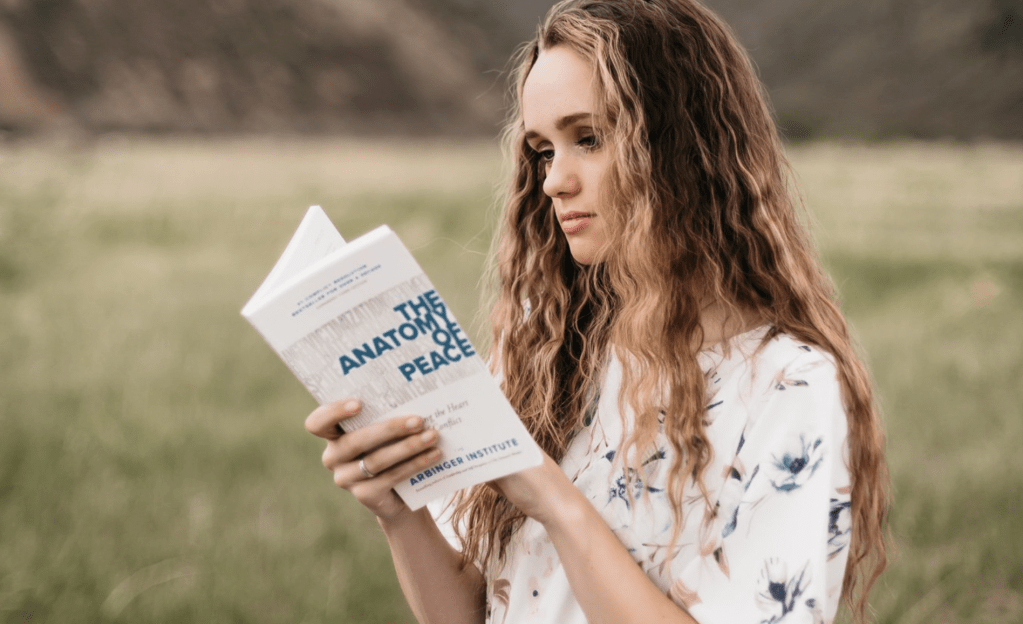
A relatively short read, I spent just nine hours going through the words, pages, and ideas tucked neatly and succinctly into The Anatomy of Peace. But even prior to completing it – in fact, probably just twenty pages in – I started asking myself if any other book had yet had such a profound impact on my way of thinking (independent of religious texts).
I believe not.
Call this a book report. Call it a summary, or a SparkNote, or a review, or a reflection. For my own purposes, approach this as the strongest reading recommendation I have ever given.
The Anatomy of Peace has a simple premise: troubled kids are sent on a little expedition while their parents hang back with some of the camp counselors to have a discussion about conflict. The entire book is the discussion being had among the parents, and that’s perhaps one of the most surprising and impactful elements. Trust me, I know that it sounds long and boring, but it makes for quick reading and quick learning.
The camp counselors state that the parents are just as much a problem as their struggling kids.
They claim that the parents, who are trying to discipline their kids into correct behavior, are perhaps harboring resentment for their child and the predicament this child has found themselves in (which is understandable and almost to be expected, right?).
The counselors decide that the frustrated parents are struggling with a heart that is at war.
And then they point out that many of the conflicts we are facing can be solved by adjusting the way we are living our own lives. They suggest that conflict can resolve naturally when we cultivate a heart that is at peace and start looking at other people as simply people (rather than as objects, obstacles, failures, etc.).
I won’t spoil everything the book has in store for you, but I will tell you this. The book addresses mindsets and mental blockades that prevent us from seeing people as equal to us; it helps us understand times when we might be justifying moments of failure. It calls out the reader for what we don’t want to address: the pride in feeling that you’re better than someone else, or the insecurity associated with feeling worse than others.
Some notable takeaways:
“If we are going to find lasting solutions to difficult conflicts or external wars we find ourselves in, we first need to find our way out of the internal wars that are poisoning our thoughts, feelings, and attitudes toward others. If we can’t put an end to the violence within us, there is no hope for putting an end to the violence without.”
“In every moment…we choose to see others either as people like ourselves or as objects. They either count like we do or they don’t.”
“Despite our best efforts, we may find that some battles are unavoidable. Some around us will still choose war. May we in those cases remember… that while certain outward battles may need to be fought, we can nevertheless fight them with hearts that are at peace. And may we remember the deeper lesson as well: that your and my and the world’s hoped-for outward peace depends most fully not on the peace we seek without but on the peace we establish within.”
“Bruises heal more quickly than emotional scars do.”
Read The Anatomy of Peace. It will call you out on your most internalized turmoils and put you face-to-face with the justifications which force you to ask hard questions and find real truths. It will help you reevaluate your life on a personal level and start building new peace in your heart.
 Hannah L. Ackerman Portfolio
Leave a comment